


Lord Scriven said he and his husband David wanted to reaffirm their love of 23 years in the eyes of the church, but were denied by existing law, adding: "It made me feel, in my country, not equal."
The Liberal Democrat peer added such a situation "devalues" the love of same-sex couples.

His remarks came as the Lords debated a proposal to allow ministers to make regulations to remove the 2013 exemption which prevents clergy members from solemnising the marriage of same-sex couples.
Lord Scriven said the amendment would not order the church to remove the exemption but, if the church changes its opinion, puts down in law the opportunity to "bring my marriage and others into the arms of the church".
Following a debate during committee stage of the Civil Partnerships, Marriages and Deaths (Registration Etc.) Bill, which aims to extend civil partnerships to opposite-sex couples, the amendment was withdrawn although it is expected to undergo further debate at a later stage.
Lord Scriven said: "I have experienced - and let's be clear - the prejudice of not being able to be married in the Church of England.
"I married just over 16 months ago.
"Me and my husband, just like every other couple, went into this with a sense of enjoyment and excitement - wishing to reaffirm our love of 23 years in the eyes of not just society, but also - because of David's view on religion - also in the eyes of the church.
"And we were denied. The law of this country denied us that particular right.
"Not equal in the eyes of the law.
"So when we talk about same-sex marriage, it is not equal in law at the moment because of the provision of the church.
"How do you think that makes me feel?
"We're not talking here about some abstract concept, we're talking about humans.
"It made me feel, in my country, not equal; not worthy of the church rejoicing in my love; not worthy of me being born in the eyes of God and being seen as equal.
"The powerful nature of that prejudice is deep. It has an effect on human individuals beyond just feeling that an institution can't marry. It devalues the very love that I and my husband and others have."
Lord Scriven said the amendment gave the Church of England the chance to follow other churches in accepting same-sex couples "as equal", adding: "If not, the prejudice that I and my husband and many others have received will continue to be hurtful and be enshrined in law."
The Bishop of Chelmsford, the Rt Rev Stephen Cottrell (pictured below), said the Church of England "seeks to welcome all people, including therefore LGBTI+ people, including people in civil partnerships and same-sex marriages".
He said there are questions about "how this welcome can be expressed", adding: "I deeply regret a situation where anybody because of their sexuality feels excluded or alienated or hurt in the way that I know some people are.
"The Church of England is at the moment in the middle of a process which is examining how we give expression to this welcome."
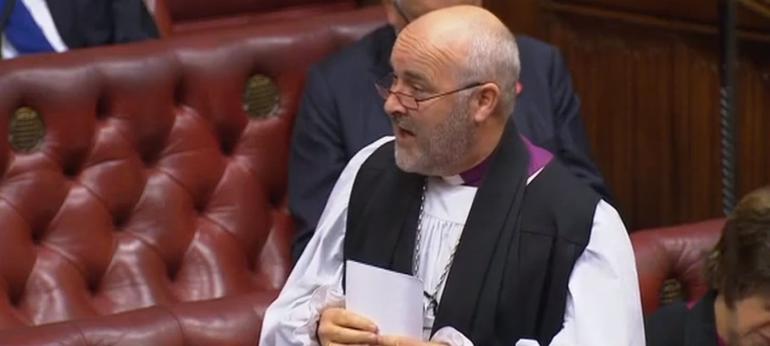
Bishop Cottrell said if the Church of England's doctrine that marriage is between one man and one woman was to be changed, it could "only be achieved by specific ecclesiastical legislation passed by the General Synod and then by Parliament".
Home Office minister Baroness Williams of Trafford said the Government did not support the amendment, saying the decision to opt-in to same-sex marriage was for religious governing bodies.
The Bill later cleared committee stage and will undergo further scrutiny at a later date.
Stay up to date with the latest news stories from a Christian perspective. Sign up to our daily newsletter and receive more stories like this straight to your inbox every morning.