


A new mini survey by Premier Christian News suggests that almost a quarter of UK Christians identify as Christian nationalists.
The survey of 260 Christians was conducted as part of a special three-part series examining the rise of Christian nationalism and its impact on the Church, society and public life in Britain.
Among the key findings, 23% of respondents said they identify as Christian nationalists, while 25% described the movement as “godly”.
At the same time, most respondents appeared to reject more extreme or exclusionary interpretations of the label. Ninety-three per cent said they were happy living in a country where neighbours are of different faiths and cultures, including Muslims, Sikhs and others.
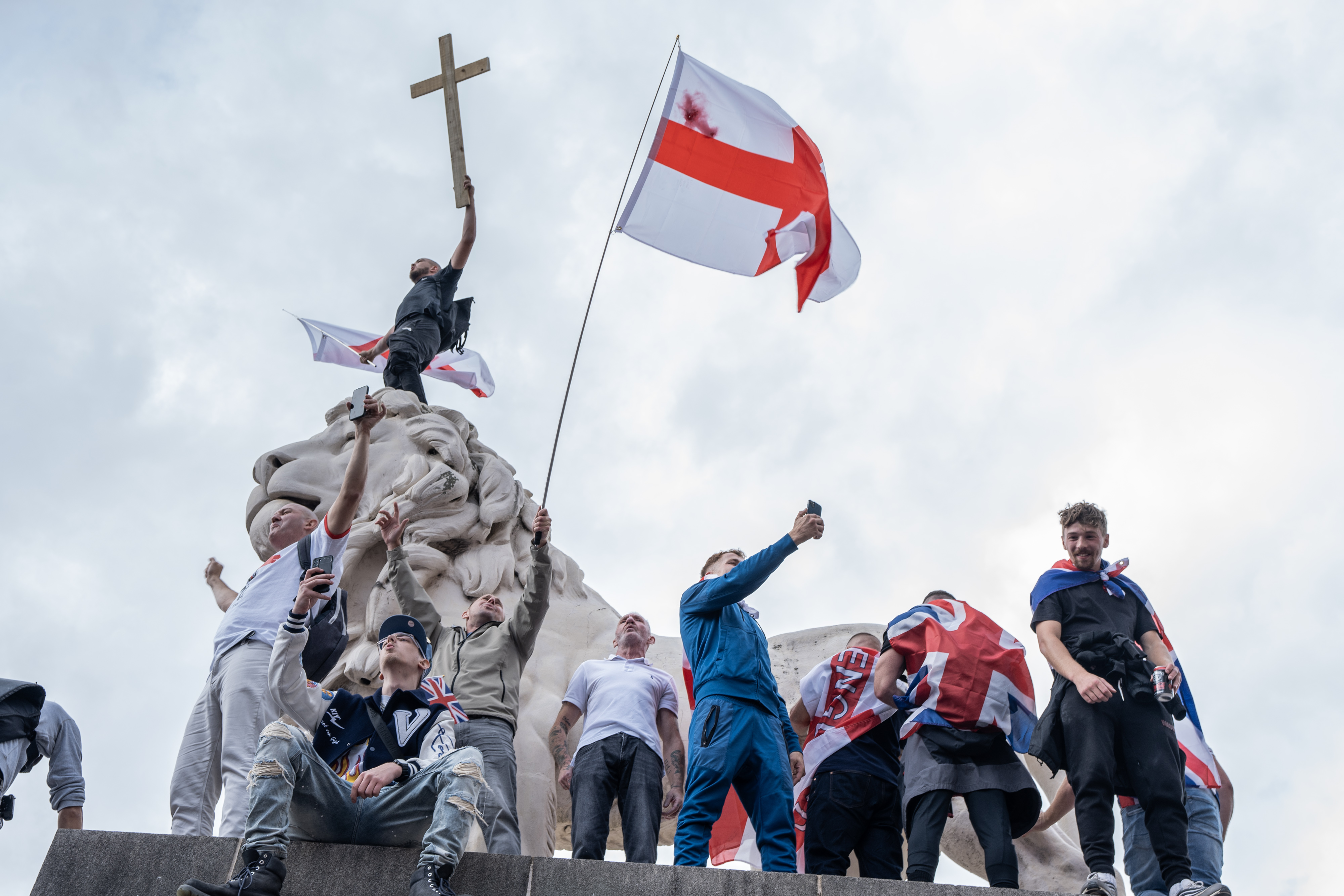
Meanwhile, 26% said they believe Christian symbols, such as the cross on the St George’s flag, have been misused in the past year.
The findings come ahead of the second Unite the Kingdom rally on Saturday. The large-scale event has sparked increasing public discussion around Christian nationalism in the UK, particularly because of its use of Christian imagery, nationalist messaging and support from controversial figures linked to the political right.
The Premier survey also asked respondents what the term “Christian nationalism” means to them. One person described it as “restoring the UK to a praying nation”, while another labelled it “right-wing people using Christian as a term to disguise racism”.
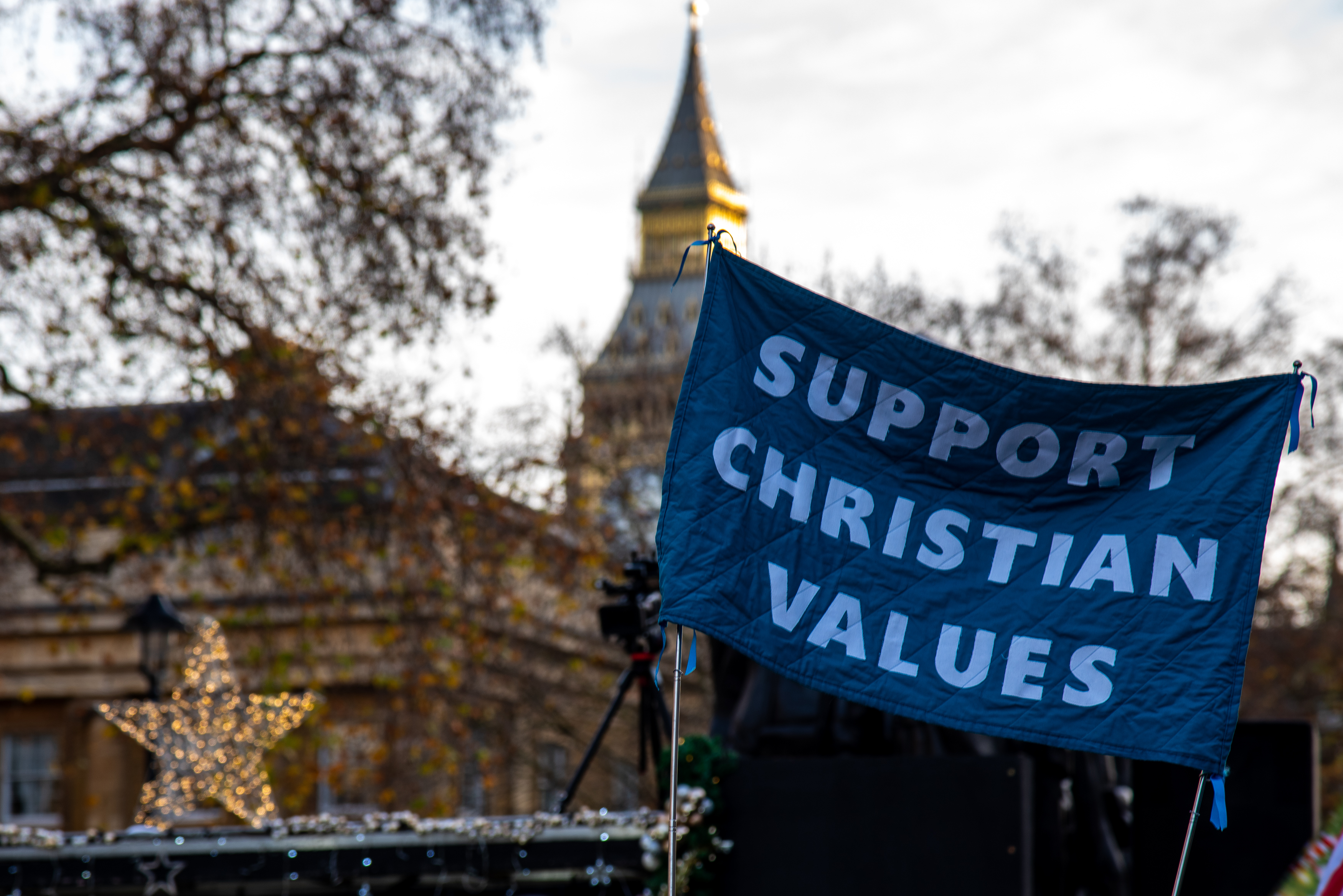
Danny Webster, head of advocacy at the Evangelical Alliance, told Premier that Christian nationalism is becoming a more visible conversation in Britain after gaining momentum in the United States.
“I would say that Christian nationalism is a particular way that Christians think about how their faith and belief interacts with the country they are in,” he said.
“If we think back over the last ten years, that has grown in the United States, but it is really only in the last year or two that in the UK it’s become a noticeable thing that people are talking about.”
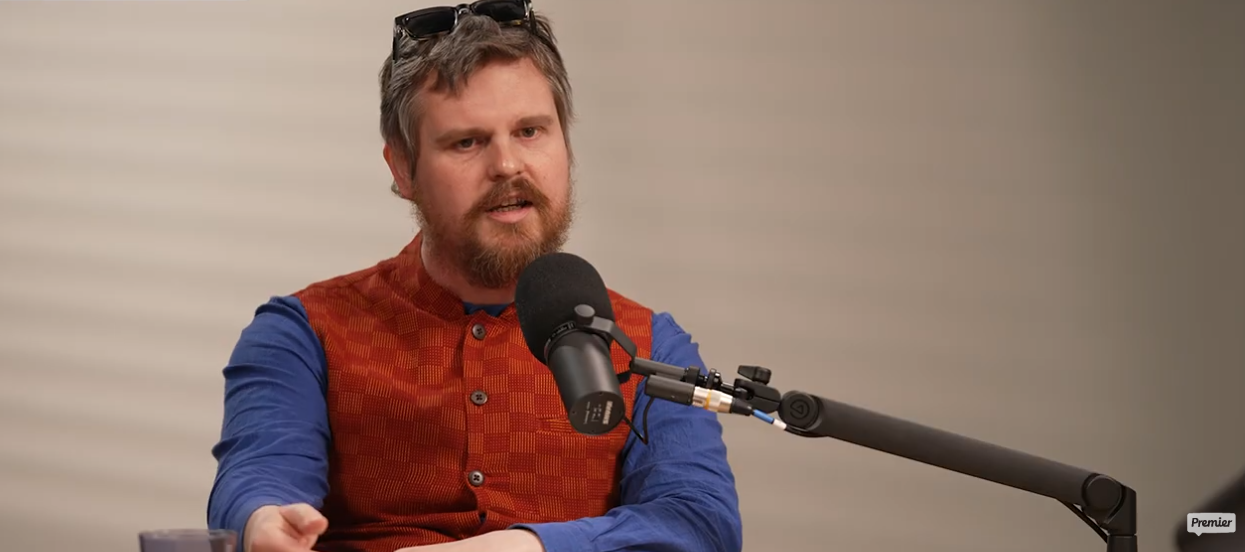
A self-described Christian nationalist who goes by the pseudonym Bob Potsiar told Premier that Christian faith should influence politics, education and culture.
“The Church, the people of God, are a nation by covenant,” he said. “As a Christian nationalist, I want a pathway to the total abolition of abortion. I want aid and solidarity with the persecuted church to be one of the primary concerns.”
Potsiar, who's more commonly known as Bob of Speaker’s Corner on his debate-style YouTube channel added: “That kind of emphasis on helping the poor or caring for the environment, which is a God-given gift, would set me apart from a lot of right-wing thinkers who treat questions around environmentalism with suspicion and show almost indifference or apathy towards the poor.”
He said that “Christian ethics, ethos and culture should be the normative prism of education in schools” and also rejected accusations that Christian nationalism in the UK is rooted in racism, despite concerns raised by critics over links between some events and figures associated with the far right.
“Certainly the Christian nationalists that I know and that I speak to, none of them have a concern about whiteness," he said. "It never comes up in conversation. And I’m possibly the most radical of the group that I talk to, at least, because I don’t connect the idea of a nation to a particular people.
“When I’m talking about the nation biblically, I’m talking about the Church... it’s universal. It’s for all peoples and all tribes. I think that the people who are doing the dog-whistling are the ones trying to label and libel everyone as racist and xenophobic who wants to talk about borders, immigration and concerns around enforcing entry laws.”

However, others have expressed concern that adversarial rhetoric by Christian nationalists surrounding immigration and national identity risks damaging Christian witness and deepening division.
Tony Uddin, a pastor in Tower Hamlets, warned that some of the discussion around nationalism “comes from a place of fear” and said truly Christian movements should be centred on reconciliation rather than hostility.
“There’s a lot of instrumentalising of working-class experiences, sometimes to express racist views,” he said. “I would say that some of the discussion really does come from a place of racism. It comes from a place of disliking people of other cultures, and I think sometimes from a place of fear.
“I would really want to advocate that if something is Christian, then it should come from a place of being reconciled to God, reconciled within the Christian community, and being ministers of reconciliation beyond that. So if something purports to be Christian, I struggle to see how it can be adversarial in nature, and I think that’s the concern I have.”
Premier Christian News’ special series on Christian nationalism can be listened to on the PremierPlus app:
Episode 1: What is Christian Nationalism?
Episode 2: How does Christian Nationalism shape our politics?
Episode 3: How can the church respond to Christian Nationalism?