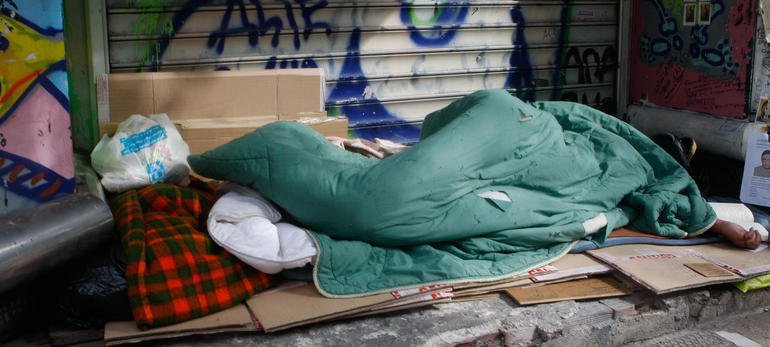


The Crisis No One Turned Away campaign says the longer a person is homeless, the harder they are to help and the more likely they will be to use public services such as A and E or psychiatric help.
It stressed how lives can easily spiral out of control leaving people vulnerable to abuse, crime and mental health problems.
The report focused on four scenarios and calculated the cost of each person, including a man in his 30's who lost his job and a woman fleeing domestic abuse.
Alison Gelder, from Christian charity Housing Justice, told Premier "If you think about what your home means to you, once you haven't got that, you really do loose part of your sense of self - it becomes harder for you to do simple things like keeping clean or keeping all your documents together."
Often single homeless people that ask their councils for help are turned away, Alison Gelder said: "The Local Authority has a statutory duty to provide them with help, but the Local Authority officers dealing with it are kind of guarding a scarce resource, so they quite often try their best to turn people away - even people who they're supposed to help."
She added that even after being re-housed or finding a job people that have previously been homeless rarely lose that fear: "It's still there in the back of your mind that you might lose all this and it takes a very long time - if it ever happens - for people to overcome that fundamental sense of insecurity."
Crisis Chief Executive Jon Sparkes, behind the report, said: "Homelessness has a terrible human cost, but it's also incredibly expensive for the public purse.
"Helping people to stay off the streets and rebuild their lives is about basic social justice - it's the right thing to do - and this study shows that it makes good economic sense too."
Listen to Premier's Hannah Tooley speak to Alison Gelder from Housing Justice, here: