





A team of scientists found characteristics including reduced aggression and faster egg-laying emerged in the birds around 1,000AD, a time when believers followed the teaching of St Benedict that four-legged animals should not be eaten.
They concluded the church rules, which permitted eating eggs and chicken during fasting, drove up demand for poultry and may have strongly influenced the domestication of chickens.
Increasing urbanisation in Britain during the Middle Ages is also thought to have been a factor.
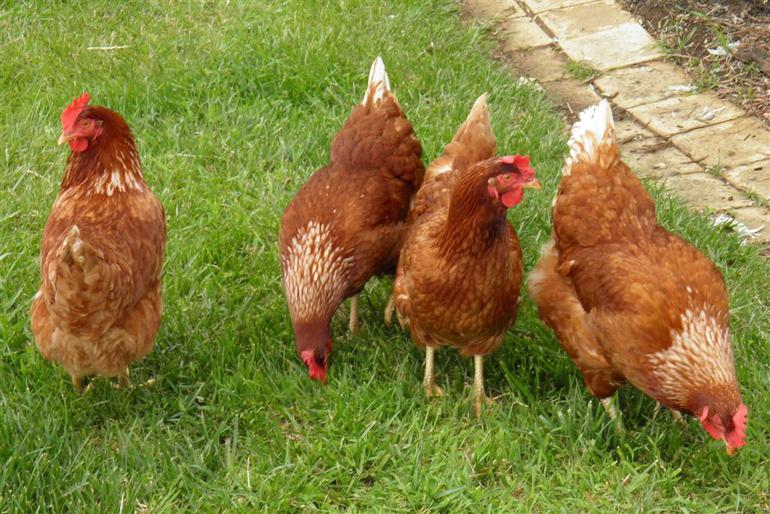
Scientists traced the evolutionary history of dozens of children, looking for variations in THRS, a gene which determines aggression levels.
They found natural selection favoured chickens with variants of THSR which helped them deal with living near to each other and made them less scared of humans.
Around a millennia ago, only four in ten of the chickens studies had the THSR gene. It is now found in all modern domestic chickens.
Lead researcher Dr Liisa Loog from Oxford University said: "We tend to think that there were wild animals and then there were domestic animals rather than thinking about the selection pressures on domestic plants and animals that varied through time.
"This study shows how easy it is to turn a trait into something that becomes fixed in an animal in an evolutionary blink of an eye.
"Just because a domestic trait is everywhere in animals and birds today does not mean it was there at the very start of the domestication process."
The research has been published in the Molecular Biology and Evolution journal.