


David Cameron has announced Britain will accept up to 20,000 Syrian refugees over the next four and a half years, but only those who are currently in camps neighbouring the war-ravaged nation.
Britain will use the established UNHCR process to identify those most in need and will expand its existing Syrian vulnerable persons relocation scheme.
Those who arrive will be granted five-year humanitarian protection visas and councils and devolved administrations will be helped to support them as the Government retools its aid budget.
Bishop Angaelos told Premier it was "a start" but added that he thought "very little would be considered enough".
He added: "I'm sure that it'll make a difference to 20,000 people and their families and I hope that is then able to be revisited as the programme continues.
"But it's a good start."
His Grace added that it was a "very complex situation" and the UK had to think about how many people were coming in.
"This needs to be a more collaborative initiative at the European level.
"If it is more collaborative then at least there is a target by which we know that a certain number of people are coming in and we can provide as much as possible for the people there.
"We could even end up accommodating more."
The "horrible manifestation of baby Aylum on the beach" had changed public and political opinion, Bishop Angaelos said.
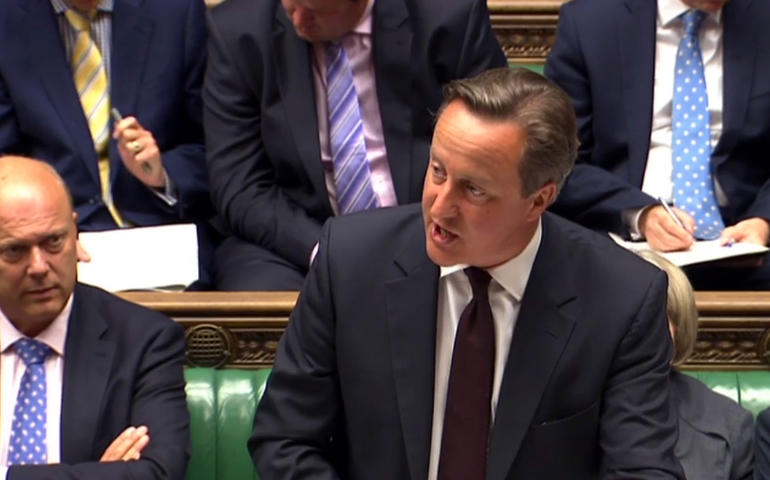
In a statement to the Commons, Mr Cameron said: "We have already provided sanctuary to more than 5,000 Syrians in Britain and have introduced a specific resettlement scheme, alongside those we already have, to help those Syrian refugees particularly at risk.
"But given the scale of the crisis and the suffering of the Syrian people it is right that we should do much more.
"We are proposing that Britain should resettle up to 20,000 Syrian refugees over the rest of this parliament.
"In doing so we will continue to show the world that this is a country of extraordinary compassion, always standing up for our values and helping those in need.
"Britain will play its part alongside our other European partners but because we are not part of the EU's borderless Schengen agreement or its relocation initiative, Britain is able to decide its own approach."